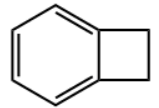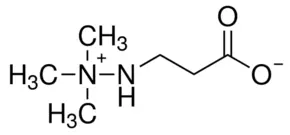

Identification
CAS Number
79917-90-1
Name
BASIONIC(TM) ST 70
Molecular Formula
C8H15ClN2
Molecular Weight
174.67
Beilstein Registry Number
6449277
MDL Number
MFCD03095425
Properties
Appearance
White crystalline powder
Safety Data
Symbol

 GHS06, GHS09
Signal Word
Warning
Hazard statements
H301,H315,H319,H411Precautionary Statements
P264 – P270 – P273 – P301 + P310 – P302 + P352 – P305 + P351 + P338WGK Germany
3
MSDS Download
Specifications and Other Information of Our BASIONIC(TM) ST 70 CAS 79917-90-1
Identification Methods
HNMR, HPLC
Purity
99% min
1-Methylimidazole
≤0.2%
Chlorobutane
≤0.02%
Water
≤5000ppm
Shelf Life
Known Application
BASIONIC(TM) ST 70 is an innovative approach to enhancing low-quality cellulose through a dual mechanism that operates at both the nanoscale and molecular levels.
Molecular-Level Enhancement : To further improve the performance of low-quality cellulose, BASIONIC™ introduces a small quantity of high-degree polymerized cellulose. This addition strengthens the entangled network of cellulose molecular chains, promoting greater cohesion among the fibers and enhancing the material’s mechanical stability. By increasing the density and resilience of the cellulose molecular network, this method enhances the overall durability and performance of low-quality cellulose. This molecular-level enhancement ensures that even lower-grade cellulose can achieve improved properties without compromising on flexibility or tensile strength, making it suitable for broader industrial applications.
Nanoscale Reinforcement : By employing ionic liquids with selective dissolution properties, BASIONIC™ can effectively dissolve cellulose while preserving cellulose nanocrystals (CNCs) in the raw material as an in-situ reinforcing phase. These CNCs possess exceptional mechanical properties and, when retained within the cellulose matrix, act as a strengthening component, improving the material’s structural integrity at the nanoscale. This approach provides a practical solution to enhance lower-grade cellulose, allowing it to gain properties closer to that of higher-quality materials by utilizing CNCs for reinforcement. The precision of ionic liquid technology is key here, enabling selective dissolution and retention of CNCs in a way that traditional methods cannot match.
General View of Documents


Links
This product is developed by our R&D company Ulcho Biochemical Limited (http://www.ulcho.com/).
Quick Inquiry
Fill out our inquiry form and one of our experts will be in touch with you shortly.