Industrial catalysis : The role of heterogeneous catalysts
Catalysis is any chemical reaction that involves a catalyst. Industrial catalytic reactions are usually the ones which are carried out on a large scale. Catalysts are chemical substances which allow the reactants an alternative pathway to break and make desired bonds. In the presence of the catalyst, the reactants require comparatively lower activation energy. Several research laboratories and industrial complexes have been researching how a catalyst works. The basic mechanism is different for individual classes of catalysts. Mainly, catalysts are categorized as either homogeneous or heterogeneous. Let’s learn a bit more about the latter type as these are frequently used in industries.
Heterogeneous catalysts
These are the catalysts which are present in a different phase than the reactants. This may be in a liquid/liquid or gas/solid or solid/liquid. The most common examples of industrial heterogeneous catalysis are reactions in which gases are passed over a solid catalyst. This is often a metal, metal oxide or zeolite catalyst. Production of ammonia, cracking of gas oil and production of nitric and sulfuric acids are the most common industrial reactions using these catalysts.
Role of catalysts in industrial reactions
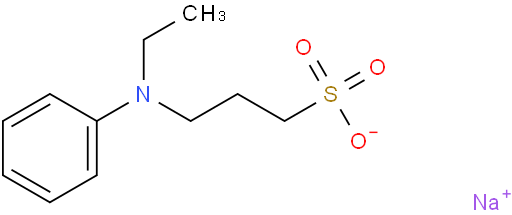
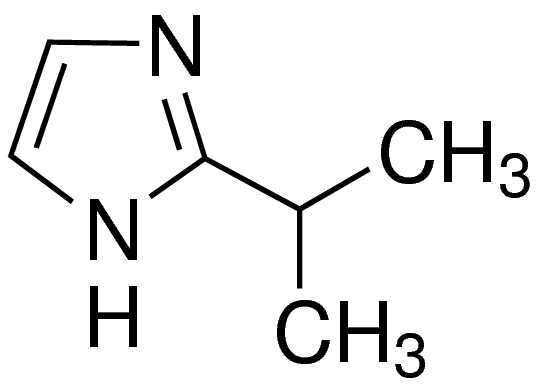
So, what do these catalysts do ? Taking the example of a solid metal catalyst and gaseous reactants, let’s visit the process briefly. First, the gas molecules will interact with the ions of the catalyst on its surface. As a result, weak intermolecular bonds are formed. This is known as physisorption, or simply, physical adsorption. Then comes chemisorption, or chemical adsorption, where chemical bonds are formed between the reactant molecules and the catalyst. A simple example would be oxidation of carbon monoxide to form carbon dioxide in the presence of palladium, a metal catalyst. This is an important reaction, converting a harmful gas (CO) into a harmless one (CO2). Excess of oxygen is utilized for the reaction, forming water as a byproduct. Here’s the chemical reaction that takes place : Pt/Pd/Rh 2CO + 2NO2CO2 + N2 This is an essential process, occurring in most vehicles’ catalytic converters. Other similar large scale applications also utilize these heterogeneous catalysts. Use of ligands The efficiency of these catalysts can further be improved by using specific ligands. For instance phosphine ligands are often used in organic synthesis, especially in reaction where C-C, C-N and C-O bonds are created. At Watson International, we offer high quality affordable catalysts and ligands well-suited for various applications. Here are the top three ligands most frequently demanded :

 Catalysis is any chemical reaction that involves a catalyst. Industrial catalytic reactions are usually the ones which are carried out on a large scale. Catalysts are chemical substances which allow the reactants an alternative pathway to break and make desired bonds. In the presence of the catalyst, the reactants require comparatively lower activation energy. Several research laboratories and industrial complexes have been researching how a catalyst works. The basic mechanism is different for individual classes of catalysts.
  Mainly, catalysts are categorized as either homogeneous or heterogeneous. Let’s learn a bit more about the latter type as these are frequently used in industries.
 So, what do these catalysts do ? Taking the example of a solid metal catalyst and gaseous reactants, let’s visit the process briefly. First, the gas molecules will interact with the ions of the catalyst on its surface. As a result, weak intermolecular bonds are formed. This is known as physisorption, or simply, physical adsorption. Then comes chemisorption, or chemical adsorption, where chemical bonds are formed between the reactant molecules and the catalyst. A simple example would be oxidation of carbon monoxide to form carbon dioxide in the presence of palladium, a metal catalyst. This is an important reaction, converting a harmful gas (CO) into a harmless one (CO2). Excess of oxygen is utilized for the reaction, forming water as a byproduct. Here’s the chemical reaction that takes place : Pt/Pd/Rh 2CO + 2NO 2CO2 + N2 This is an essential process, occurring in most vehicles’ catalytic converters. Other similar large scale applications also utilize these heterogeneous catalysts. Use of ligands The efficiency of these catalysts can further be improved by using specific ligands. For instance phosphine ligands are often used in organic synthesis, especially in reaction where C-C, C-N and C-O bonds are created. At Watson International, we offer high quality affordable catalysts and ligands well-suited for various applications. Here are the top three ligands most frequently demanded :

![Structure of 4-bromo-N-ethyl-6,7-dihydro-6-methyl-7-oxo-1H-Pyrrolo[2,3-c]pyridine-2-carboxamide CAS 1628864-79-8](https://www.watson-int.com/wp-content/uploads/2022/02/Structure-of-4-bromo-N-ethyl-67-dihydro-6-methyl-7-oxo-1H-Pyrrolo23-cpyridine-2-carboxamide-CAS-1628864-79-8.png "Structure of 4-bromo-N-ethyl-6,7-dihydro-6-methyl-7-oxo-1H-Pyrrolo[2,3-c]pyridine-2-carboxamide <span class=\"caps\">CAS</span> 1628864-79-8")