Background of Cap
mRNA vaccines work by delivering mRNA that encodes for an antigen into human cells, where it is translated to produce the corresponding antigen protein, thereby inducing an effective immune response. The stability of mRNA, translation efficiency, and inherent immunogenicity are key to the success of mRNA as a therapeutic. The 5’ cap structure of mRNA prevents degradation by exonucleases, recruits translation initiation factors (eIF4E) to promote ribosome recognition and initiation of translation, and prevents recognition by innate immune receptors. Therefore, optimizing the mRNA cap structure (cap) is crucial for enhancing the bioactivity of mRNA vaccines and reducing their immunogenicity.
Currently, co-transcriptional capping (“one-step” capping) is the preferred method for in vitro capping of mRNA. However, the complexity of the preparation process and the structurally patented cap analog materials have become a “bottleneck” in the mRNA supply chain. New cap analogs that are free from patent barriers, effective in capping, and cost-efficient are the top choice for mRNA vaccine/drug manufacturing companies, yet they also represent a challenging problem that mRNA material companies urgently need to solve !
Watson Bio, as an upstream material supplier for mRNA vaccines with core technologies, aims to achieve a top-down industrial chain substitution in the mRNA sector. Its strong R&D team has been dedicated to developing and optimizing new cap analog structures and conducting R&D on cap analog material products with independent intellectual property rights, thus solving problems for mRNA researchers worldwide ! Previously, Watson Bio had shared some data on its self-developed cap analog products. This post will specifically showcase the research findings of Watson’s independently developed new cap analog, Cap5 (ENE), aiming to deliver a report card to the mRNA industry professionals concerned with the experimental effects of new cap analog products !
Project Background of Cap
Herpes Zoster (HZ), also known as shingles, is caused by the reactivation of the latent Varicella-Zoster Virus (VZV), which typically causes chickenpox in children. After recovery from chickenpox, the virus remains dormant in the body for a long time. With aging, as the immune function gradually declines, the virus can reactivate and cause shingles. Unlike chickenpox, shingles does not confer “once infected, lifetime immunity,” and over 90% of adults harbor the latent Varicella-Zoster Virus. To date, there are four shingles vaccines approved for marketing globally, with the main technology platforms being live attenuated vaccines and recombinant protein vaccines. Live attenuated vaccines are less effective in the elderly and cannot be used in immunocompromised individuals ; while subunit vaccines perform better in older patients, they have more significant side effects. mRNA, as a new generation vaccine technology, with its rapid development advantages and platform-based production processes, is poised to become a new option for the next generation of herpes virus vaccines.
Experimental Procedure
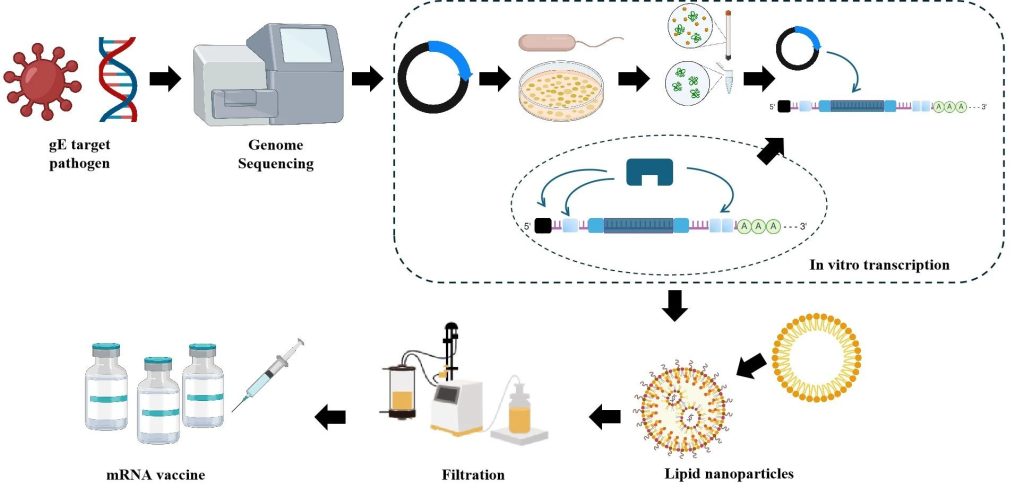
Watson collaborates with partners on the VZV vaccine project to design and develop mRNA vaccines. Through a step-by-step experimental validation process — antigen selection, sequence design, in vitro transcription, mRNA-LNP preparation, and animal experiments — the designed VZV_mRNA1 and VZV_mRNA2 shingles mRNA vaccines demonstrated very strong immune effects in mice. Additionally, in synthesizing VZV_mRNA1 and VZV_mRNA2, Watson’s proprietary new cap analog Cap5(ENE) and the traditional m7GpppAmG were specifically used to assess the experimental effectiveness of Cap5(ENE).
Experimental Results of Cap
- Both mRNA and LNP met delivery standards.: Watson Bio possesses capabilities in the preparation and testing of mRNA/LNP, and offers comprehensive solutions in the development and process research of innovative animal mRNA vaccines in the field of veterinary bioproducts, such as RABV, FMDV, PEDV, PRV, PRRSV, ASFV, etc., with rich experience and multiple successful cases. In this joint development of the VZV mRNA vaccine, different sequences were used for the preparation of mRNA/LNP. Upon testing, the VZV-mRNA vaccines all met the delivery standards !


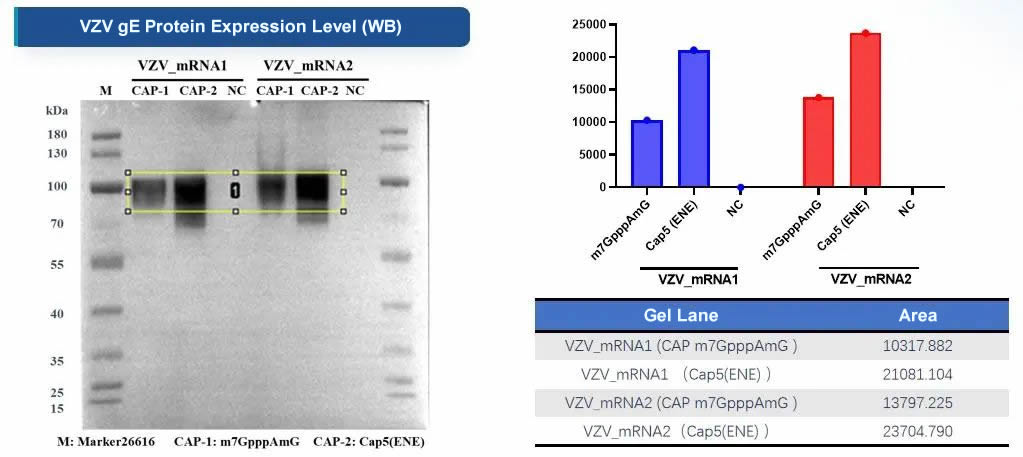
- Cell transfection — high levels of target protein expression : HEK293T cells were transfected with 10μg of VZV_mRNA1 and VZV_mRNA2 LNP formulations, respectively. 48 hours post-transfection, the expression of the target protein gE was validated via Western Blot using a specific antibody (ab272686). The results indicated that the gE protein expression levels of the Cap5(ENE) VZV mRNA vaccines were significantly higher than those of the CAP m7GpppAmG VZV mRNA vaccines, with the overall protein expression rate being 2.04 times and 1.72 times that of m7GpppAmG, respectively.
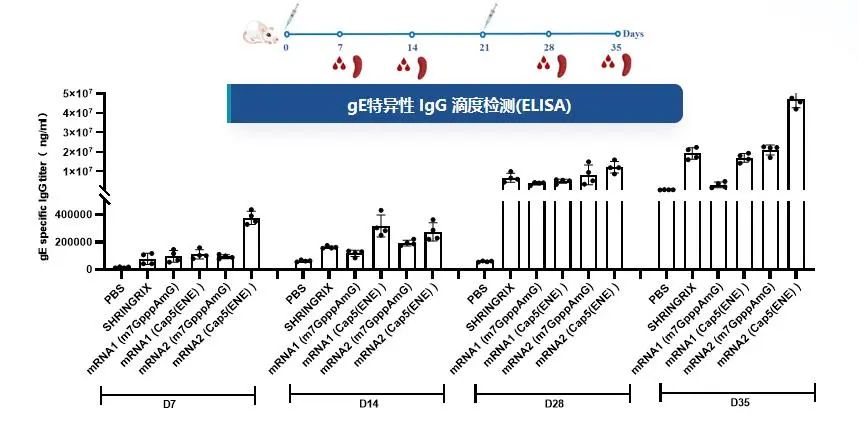
- Humoral immunity — high titers of specific antibodies : Mice were injected intramuscularly with 10μg of VZV_mRNA1 and VZV_mRNA2 vaccines and a control commercial vaccine on D0 and D21. Blood was collected from the orbit on D7 and D14 after each immunization to isolate serum for the detection of serum gE-specific IgG antibody levels. The results showed that the antibody titers of the Cap5(ENE) mRNA vaccines were higher than those of the CAP m7GpppAmG. Specifically, the IgG antibody levels of the VZV_mRNA2 (Cap5(ENE)) vaccine were 4.0 times (D7), 1.43 times (D14), 1.46 times (D28), and 2.24 times (D35) higher than those of the VZV_mRNA2 (CAP m7GpppAmG).
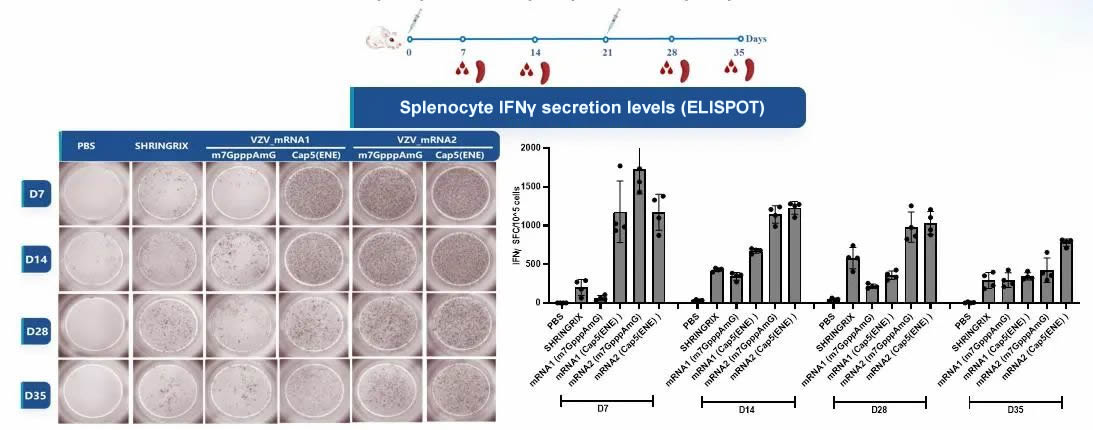
- Cellular immunity evaluation — high IFNγ secretion : Mice were injected intramuscularly with 10μg of VZV_mRNA1 and VZV_mRNA2 vaccines and a control commercial vaccine on D0 and D21. The spleens were harvested on D7 and D14 after each immunization, and splenic lymphocytes were isolated for the detection of spleen gE-specific lymphocyte IFNγ secretion levels. The results indicated that the secretion levels of IFNγ from the Cap5(ENE) mRNA vaccines were higher than those from CAP m7GpppAmG. Specifically, the cytokine IFNγ secretion levels of the VZV_mRNA2 (Cap5(ENE)) vaccine were 1.07 times (D14), 1.06 times (D28), and 1.84 times (D35) higher than those of the VZV_mRNA2 (CAP m7GpppAmG).
Conclusion
Cap5(ENE), product number CAP5752
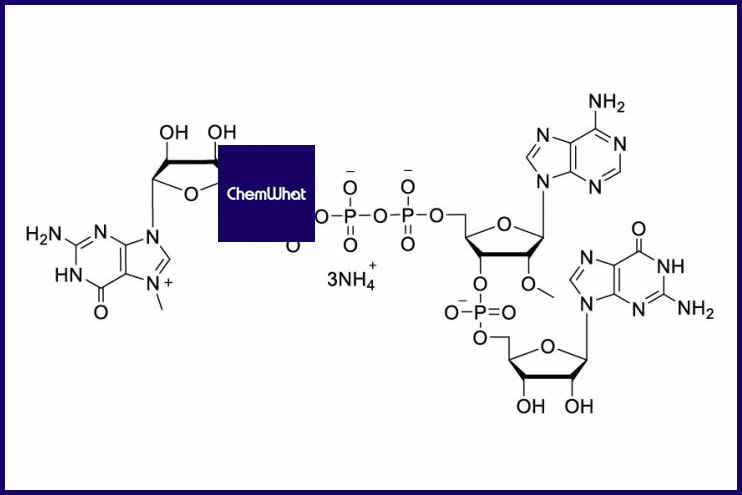
- The Cap5(ENE) mRNA vaccine is consistent with the CAP m7GpppAmG mRNA vaccine in terms of CMC preparation parameters.
- The target protein expression level of the Cap5(ENE) mRNA vaccine at the cellular level is higher than that of the CAP m7GpppAmG mRNA vaccine.
- In mice, both the humoral immunity level (IgG) and the cellular immunity level (IFNγ) of the Cap5(ENE) mRNA vaccine are higher than those of the CAP m7GpppAmG mRNA vaccine.
Compared to the cap analog CAP m7GpppAmG, Watson Bio’s proprietary cap analog Cap5(ENE) employs the same method for in vitro transcription preparation of mRNA, requiring only a replacement of the cap analog during co-transcription. Additionally, Watson Bio has conducted a series of biological validations and pharmacological evaluations of the cap analog, which show that mRNA prepared with Cap5(ENE) not only has higher levels of target protein expression but also exhibits higher levels of both humoral and cellular immunity in mice than the commonly used cap analog CAP m7GpppAmG. Let’s look forward to the later experimental results of Cap5(ENE), at which time Watson Bio will also share the data.