Identification
CAS Number
886-38-4
Name
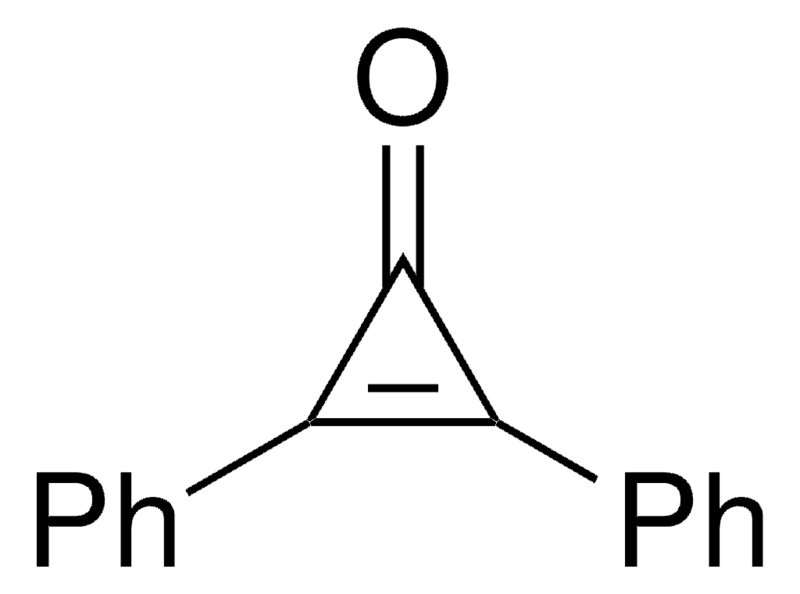
Diphenylcyclopropenone
Synonyms
1,2-Diphenylcyclopropen-3-one
1,2-Diphenylcyclopropenone
2,3-Diphenyl-2-cyclopropen-1-on
[German]
[ACD/IUPAC Name]
2,3-Diphenyl-2-cyclopropen-1-one
[ACD/IUPAC Name]
2,3-Diphényl-2-cyclopropén-1-one
[French]
[ACD/IUPAC Name]
2,3-Diphenylcycloprop-2-en-1-on
2,3-diphenylcycloprop-2-en-1-one
2,3-Diphenylcycloprop-2-enone
2-Cyclopropen-1-one, 2,3-diphenyl-
[ACD/Index Name]
212-948-4
[EINECS]
886-38-4
[RN]
Diphencyprone
diphenylcycloprop-2-en-1-one
DIPHENYLCYCLOPROPENONE
DPC
DPC (VAN)
I7G14NW5EC
[UNII]
MFCD00001311
[MDL number]
Unverified
2,3-di(phenyl)-1-cycloprop-2-enone
2,3-di(phenyl)cycloprop-2-en-1-one
2,3-Diphenyl-cycloprop-2-enone
2,3-DIPHENYLCYCLOPROPENONE
2-Cyclopropen-1-one, 2,3-diphenyl- (9CI)
212-948-4MFCD00001311
98%
Cyclopropenone, 2,3-diphenyl-
Cyclopropenone, diphenyl-
Cyclopropenone, diphenyl- (8CI)
DPCP
EINECS 212-948-4
SMILES
O=c1c(-c2ccccc2)c1-c1ccccc1
StdInChI
InChI=1S/C15H10O/c16-15-13(11-7-3-1-4-8-11)14(15)12-9-5-2-6-10-12/h1-10H
StdInChIKey
HCIBTBXNLVOFER-UHFFFAOYSA-N
Molecular Formula
C15H10O
Molecular Weight
206.24
EINECS
212-948-4
Beilstein Registry Number
608049
MDL Number
MFCD00001311
Properties
Appearance
Off-white to light cream fine powder
Melting point
119-121°C
Safety Data
Symbol
 GHS07
Signal Word
Warning
Hazard statements
H317Precautionary Statements
P280 – P302 + P352Personal Protective Equipment
dust mask type N95 (US), Eyeshields, Gloves
RIDADR
NONH for all modes of transport
WGK Germany
3
Specifications and Other Information of Our Diphenylcyclopropenone CAS 886-38-4
Identification Methods
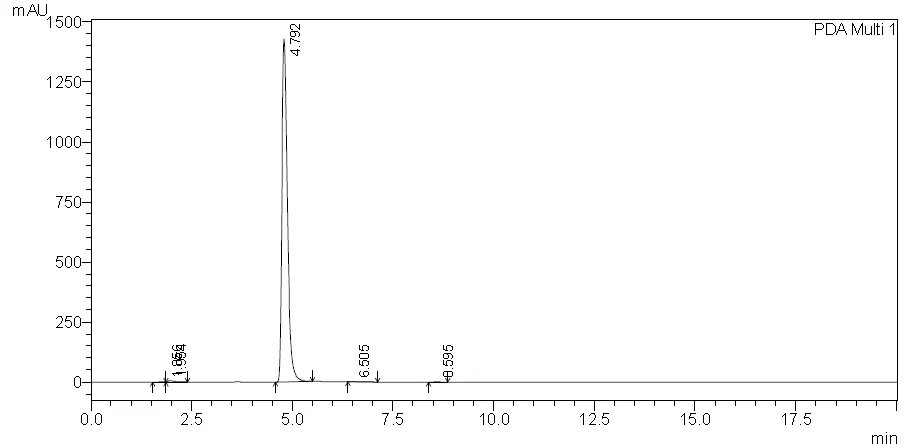
HNMR, HPLC
Purity
98%min
Solubility(25 mg/1ml acetone)
Colorless to yellow
Moisture
≤0.5%
Shelf Life
1 year
Storage
Under room temperature away from light
Known Application
Diphenylcyclopropenone (DPCP) has various applications in different fields. In the medical field, it can serve as a potential lead compound for anti-tumor drugs. It may regulate tumor cell signaling pathways, such as affecting the activity of certain kinases, thereby inhibiting tumor cell proliferation and inducing apoptosis. It shows inhibitory effects on specific cancer cells like breast cancer cells and colon cancer cells by disrupting their metabolic processes and blocking the cell cycle. Additionally, it might play a role in immune regulation, potentially adjusting the activity of immune cells and modulating T-cell differentiation and function for the treatment of autoimmune diseases. In the field of materials science, it is used in organic photovoltaic materials for organic solar cells. It helps adjust the energy band structure and absorption spectrum of materials to improve the photoelectric conversion efficiency. It is also used in OLED materials to synthesize organic molecules with specific luminescent properties and regulate OLED performance such as color, brightness, and stability through combination with other functional groups. In the chemical synthesis field, diphenylcyclopropenone is an important intermediate for many complex organic compound syntheses. It can be used as a starting material or a key reaction intermediate in the synthesis of polycyclic aromatic hydrocarbons and biologically active heterocyclic compounds. Through a series of organic reactions like nucleophilic addition and cycloaddition reactions, it can be converted into target products.
General View of Documents


Links
This product is developed by our R&D company Watsonnoke Scientific Ltd (http://www.watsonnoke.com/).
Quick Inquiry
Fill out our inquiry form and one of our experts will be in touch with you shortly.