Ionic Liquids and Their Application in Different Industrial Settings
Some call them solvents of the future, others call them green solvents and then there are few who also label them as designer solvents…
But what exactly are ionic liquids ?
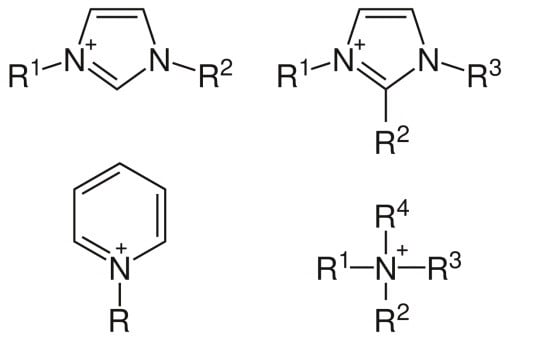
Simply put, ionic liquids are salts in the liquid state, having melting point close to or below room temperature. Salt – as in table salt ? No. In chemistry, salt is another name for an ionic compound that is formed from a neutralization reaction between an acid and a base. NaCl is a salt and so is CuSO4. Salts compose of anions (negatively charged atoms) and cations (positively charged atoms). These anions and cations can either be inorganic, organic, monoatomic or polyatomic and are held together by electrostatic forces in an ionic bond. Reiterating, salts that exist as liquid at near-ambient temperature are called ionic liquids. Aren’t salts supposed to exist in solid state under normal room temperature ? Yes, but not all. That’s why a clear distinction is made in this case, specifically including those salts that exist as liquid at room temperature. To clear any confusions : NaCl is a salt but it is not an ionic liquid. TriPhenylButylPhosphonium Iodide is a salt and as well as an ionic liquid.
Industrial Applications of Ionic Liquids
Ionic liquids are used in plethora of industrial applications, serving different purposes. The most common of these applications are listed below :
As heterogenous and homogenous catalysts
Certain ionic liquids can dissolve catalysts and at the same time they can also be immiscible with the process’s reactants and products. This property allows them to be used as heterogenous as well as homogenous catalysts in industrial processes.
As absorbents of carbon dioxide
Ionic liquids can absorb carbon dioxide. This makes their deployment ideal in industrial settings to help reduce carbon dioxide emissions. It’s one of the reasons why ionic liquids are called green solvents. Furthermore, their inertness to ionizing radiations is currently being looked into to potentially channel their use to treat high-level nuclear waste.
As metal ions purifier
Industries discharge contaminated and polluted water in rivers and oceans. Among the different types of pollutants found in these contaminated discharges, cadmium and mercury carry serious risks to the ecosystem. Ionic liquids can absorb these metal ions and ensure that water bodies do not get contaminated. Well, this wraps up our discussion about what are ionic liquids and how they are being used in different industrial processes. If you want to learn more about ionic liquids, here is a bonus read for you…

 Some call them solvents of the future, others call them green solvents and then there are few who also label them as designer solvents…