Identification
CAS Number
113170-55-1
Name
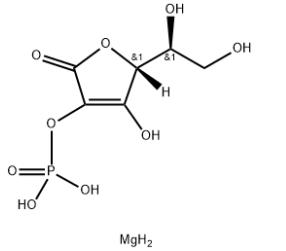
Magnesium ascorbyl phosphate
Synonyms
113170-55-1
[RN]
Magnesium (5R)-5-[(1S)-1,2-dihydroxyethyl]-4-hydroxy-2-oxo-2,5-dihydro-3-furanyl phosphate
[IUPAC name – generated by ACD/Name]
Magnesium L-ascorbic acid-2-phosphate
Magnesium-(5R)-5-[(1S)-1,2-dihydroxyethyl]-4-hydroxy-2-oxo-2,5-dihydro-3-furanylphosphat
[German]
[IUPAC name – generated by ACD/Name]
Phosphate de magnésium et de (5R)-5-[(1S)-1,2-dihydroxyéthyl]-4-hydroxy-2-oxo-2,5-dihydro-3-furanyle
[French]
[IUPAC name – generated by ACD/Name]
SMILES
O=C1OC@HC(O)=C1OP(=O)([O-])[O-].[Mg+2]
StdInChI
InChI=1S/C6H9O9P.Mg/c7-1-2(8)4-3(9)5(6(10)14-4)15-16(11,12)13;/h2,4,7-9H,1H2,(H2,11,12,13);/q;+2/p-2/t2-,4+;/m0./s1
StdInChIKey
ACFGRWJEQJVZTM-LEJBHHMKSA-L
Molecular Formula
C6H7MgO9P
Molecular Weight
278.392
Properties
Appearance
Off-white to white powder
Safety Data
Symbol
Signal Word
Warning
WGK Germany
3
MSDS Download
Specifications and Other Information of Our Magnesium ascorbyl phosphate CAS 113170-55-1
Identification Methods
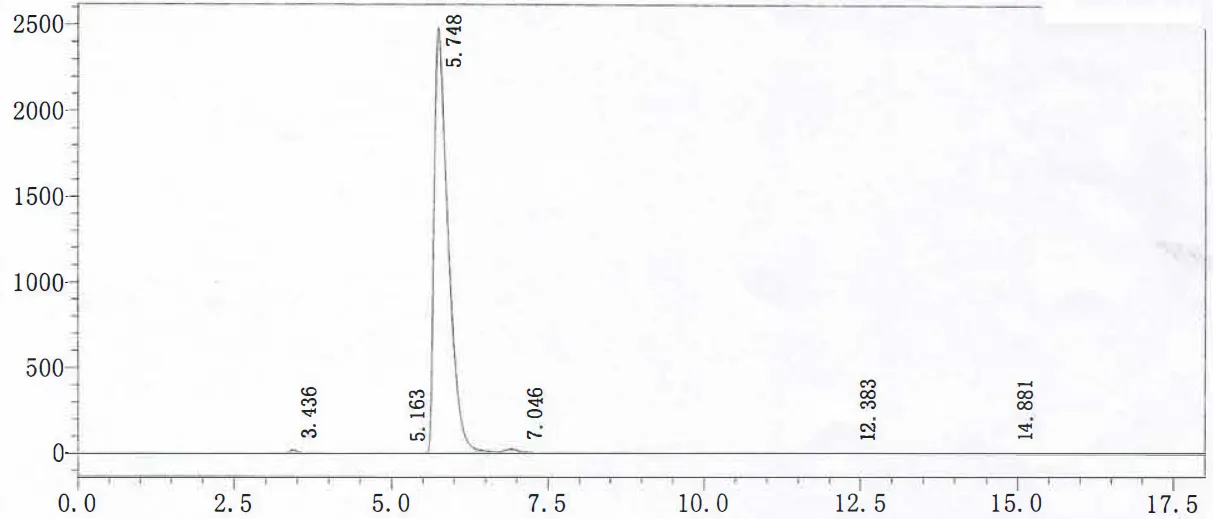
HPLC
Assay
95% ~105%
Identification
- Color reaction : Positive
- Magnesium salt reaction : Positive
Specific Optical Rotation
+31.0-+35.0
PH
7.0~9.0
State of Solution
Colourless to pale
Clarity of Solution
Clear
Color of Solution
≤70APHA
Chloride
≤0.035%
Heavy Metals
≤20ppm
Arsenic
≤2.0ppm
Free Ascorbic Acid
≤0.5%
Free Phosphoric Acid
≤1.0%
Derinvatives of Ascorbic Acid
≤3.5%
Ketogulonic Acid and IT’S Derivatives
≤2.5%
Water
≤29%
Specific Rotation(20º 0.1M HCL )
+20.0º ~+26.5º
Total Bacterial Count
≤100CFU/g
CalciUum Content
≤600ppm
Infrared Spectroscopy
Conform to standard
Bioburden Testing
≤100CFU/g
Endo Toxin
≤5EU/mg
Shelf Life
3 years
Storage
Store at room temperature, Sealed and away from light.
Known Application
1. Cosmetics and Personal Care Whitening and Anti-Blemish : Inhibits tyrosinase activity, reduces melanin production, and is used to whiten, lighten blemishes, and improve uneven skin tone. Antioxidant : Scavenges free radicals, preventing skin aging caused by UV rays and environmental pollution. Promotes Collagen Synthesis : Stimulates collagen production by fibroblasts, improving skin elasticity and reducing fine lines. 2. Sunscreen Synergy : Often used in conjunction with sunscreen ingredients to enhance protective effects. Commonly used in : creams, serums, lotions, sunscreens, anti-blemish creams, eye creams, etc. 3. Pharmaceuticals and Healthcare As a vitamin C derivative, it contributes to antioxidant and skin repair. Research involves its use in improving skin inflammation and assisting wound healing. 4. Food and Other Applications (Limited) Compared to sodium/calcium ascorbate, MAP is less commonly used in the food industry, primarily due to its high cost and its focus on the high-value-added skincare market.
General View of Documents
Links
This product is developed by our R&D company Apnoke Scientific Limited (http://www.apnoke.com/).
Quick Inquiry
Fill out our inquiry form and one of our experts will be in touch with you shortly.

![Structure of Sulfonium, triphenyl-, salt with 3,3,4,4-tetrafluoro-4-sulfobutyl tricyclo[3.3.1.13,7]decane-1-carboxylate CAS 1001347-91-6](https://www.watson-int.com/wp-content/uploads/2026/04/Structure-of-Sulfonium-triphenyl-salt-with-3344-tetrafluoro-4-sulfobutyl-tricyclo3.3.1.137decane-1-carboxylate-CAS-1001347-91-6.jpg "Structure of Sulfonium, triphenyl-, salt with 3,3,4,4-tetrafluoro-4-sulfobutyl tricyclo[3.3.1.13,7]decane-1-carboxylate <span class=\"caps\">CAS</span> 1001347-91-6")