Metal catalysts are popular for use in various chemical reactions, particularly those carried out on a large scale in industry. Common transition metal catalysts such as Ruthenium and Palladium often utilize phosphine ligands for stability during the reaction. This occurs after a complex of a transition metal catalyst is formed with a phosphine ligand. Before we learn more about these complexes, let’s explore the basics of phosphine ligands.
What is phosphine ?
This one name refers to three different compounds (or groups of chemicals). First, it refers to phosphine gas which is out of the scope of this article. Second, it refers to a group of organophosphine compounds with the chemical formula PRnH3-n. According to the value of ‘n’, these are classified as primary (n=1), secondary (n=2) and tertiary (n=3) phosphines. This is where the third classification comes in. A class of tertiary phosphines (PH3) is typically also referred to as phosphines or ‘phosphine ligands’. These are aryl and alky derivates of phosphines, used as ligands for transition metal catalysts. Phosphine ligands are categorized as ‘L-type’ ligands as these are derived from precursors which were charge-neutral. As ligands, these compounds can stabilize a range of metals by forming metal phosphine complexes.
Metal phosphine complexes
Several metal complexes use organophosphine compounds as ligands. These complexes are lipophilic with good solubility in organic solvents. Furthermore, they are also compatible with metals in different oxidation states. These two properties make them particularly useful in homogeneous catalysis, and in some cases, heterogeneous catalysis too. These complexes are both σ-donors and π-acceptors.
How are these prepared ?
The charge of a metal complex remains unchanged after addition of a ligand. Phosphine ligands can be added to an unsaturated metal precursor or through displacement of another bound ligand. For instance, palladium chloride is treated with triphenylphosphine to form bis(triphenylphosphine)palladium(II) chloride.
Bonding and reaction
Phosphine ligands interact as Lewis bases with metal catalysts, functioning as σ donor ligands. After complex formation, they work as spectators rather than actors in the reaction. Generally, the only action one sees is the dissociation of the ligand from the complex. Other classes of phosphines, primary and secondary, are also used as ligands in some cases.
Commonly used phosphine ligands
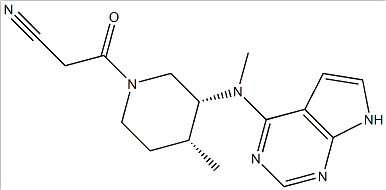
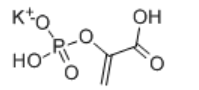
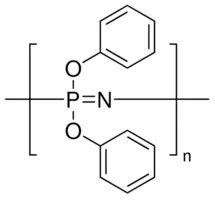
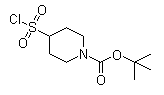
A number of phosphine ligands are popular for use in various reactions. For example, Xantphos is a bidentate ligand which forms complexes with platinum chloride. Such ligands are commonly used for hydroformylation of alkenes. Here are the most commonly used ligands available at Watson International :
If you’re looking for high purity phosphine ligands and homogeneous or heterogeneous catalysts, then you are at the right place. Call us or order online.

 Metal catalysts are popular for use in various chemical reactions, particularly those carried out on a large scale in industry. Common transition metal catalysts such as Ruthenium and Palladium often utilize phosphine ligands for stability during the reaction. This occurs after a complex of a transition metal catalyst is formed with a phosphine ligand. Before we learn more about these complexes, let’s explore the basics of phosphine ligands.
 This one name refers to three different compounds (or groups of chemicals). First, it refers to phosphine gas which is out of the scope of this article. Second, it refers to a group of organophosphine compounds with the chemical formula PRnH3-n. According to the value of ‘n’, these are classified as primary (n=1), secondary (n=2) and tertiary (n=3) phosphines.
  This is where the third classification comes in. A class of tertiary phosphines (PH3) is typically also referred to as phosphines or ‘phosphine ligands’. These are aryl and alky derivates of phosphines, used as ligands for transition metal catalysts. Phosphine ligands are categorized as ‘L-type’ ligands as these are derived from precursors which were charge-neutral. As ligands, these compounds can stabilize a range of metals by forming metal phosphine complexes.