Benzocyclobutene (BCB) is an organic compound with a rigid molecular structure composed of a conjugated benzene ring and a four-membered ring. Its excellent thermal stability and electrical properties have made it a highly promising candidate for next-generation electronic materials. Historically, its industrial adoption has been constrained by high production costs, complex purification processes, and limited output. However, with growing demand in high-end applications and recent advances in upstream technology, BCB is now poised for industrial-scale deployment.
Material Properties and Structural Advantages
BCB (C₈H₈) is a non-polar molecule, free of ester, carboxyl, or amide groups, giving it excellent dielectric properties and low moisture absorption. Its dielectric constant (Dk) and dissipation factor (Df) remain stable across wide temperature and frequency ranges — key metrics for ensuring signal integrity in high-frequency, high-speed communication systems. Unlike conventional materials such as PSPI or PPO, BCB offers superior signal transmission with reduced losses, making it ideal for high-performance computing and communication platforms.
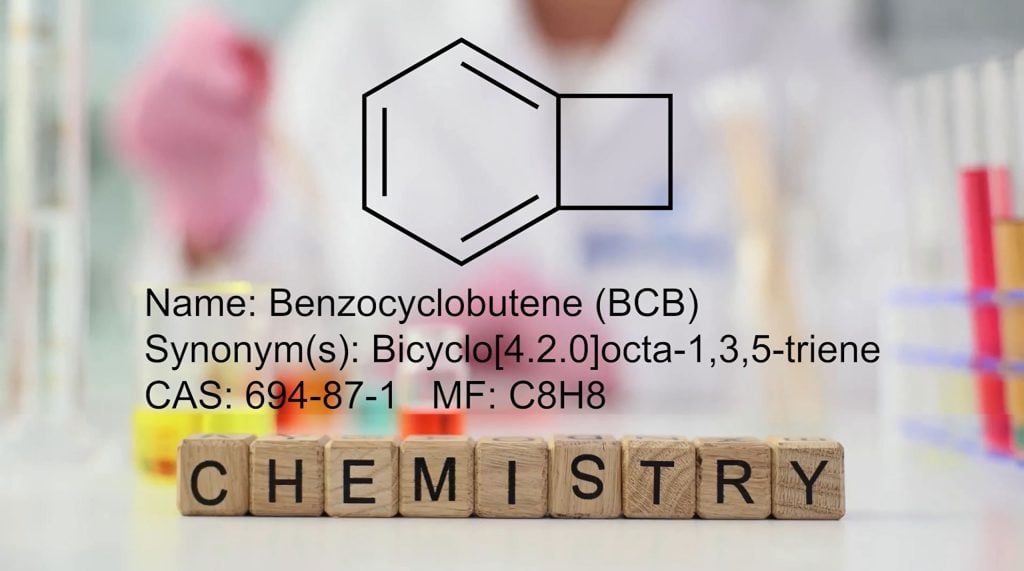
BCB can be formulated into both thermoset and thermoplastic polymers, offering versatility in resin system design and co-polymerization potential.
Two Core Applications Driving BCB Demand
Core Substrate in High-Frequency, High-Speed Copper Clad Laminates (CCL)
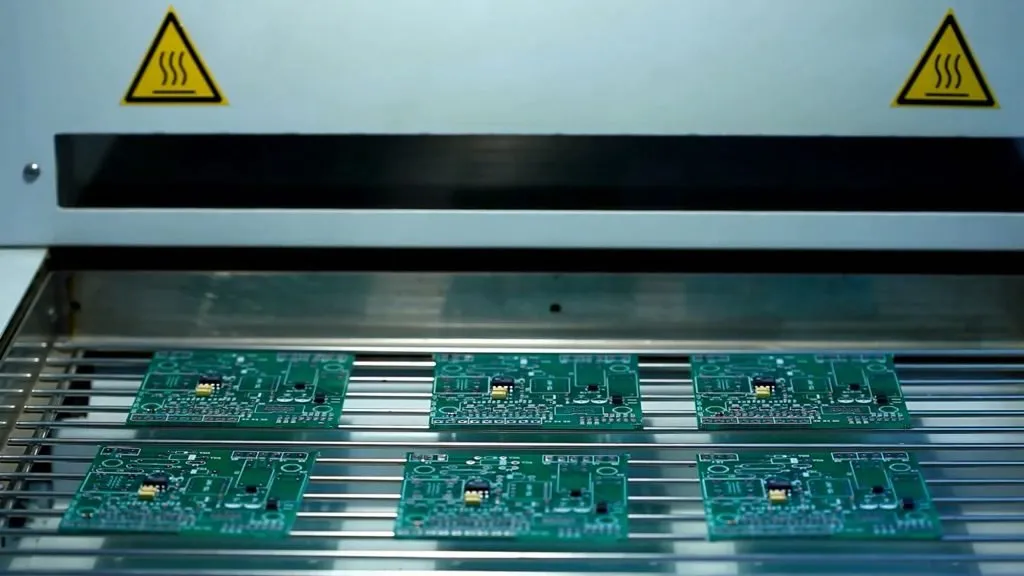
The demand for high-speed CCLs is surging due to infrastructure advances in AI computing, 5G/6G communication, and next-gen data centers. For instance, 5G networks operate at frequencies above 20 GHz with data rates exceeding 10 – 20 Gbps, requiring substrate materials with extremely low Dk and Df to reduce signal attenuation and distortion. AI infrastructure further accelerates this trend. NVIDIA’s upcoming Rubin-series and Ultra architecture server platforms, featuring 78-layer M9 orthogonal backplanes, drive the need for thermally stable, low-loss substrates. Each server unit can include up to 576 modules, with single-unit board values reaching $200,000, underscoring the critical role of advanced CCL materials.
AI infrastructure further accelerates this trend. NVIDIA’s upcoming Rubin-series and Ultra architecture server platforms, featuring 78-layer M9 orthogonal backplanes, drive the need for thermally stable, low-loss substrates. Each server unit can include up to 576 modules, with single-unit board values reaching $200,000, underscoring the critical role of advanced CCL materials.
Similarly, the deployment of 800G Ethernet switches, expected to become mainstream by 2026, is pushing PCB design toward the adoption of M8 and above-grade materials. These require resin systems with enhanced thermal and electrical performance.
In this context, hydrocarbon resins have become a mainstream solution due to their low Dk/Df performance. Among them, BCB outperforms polybutadiene (PB)-based systems in terms of thermal expansion, processing stability, corrosion resistance, and adhesion. By 2026, global demand for hydrocarbon-based resins in CCLs is projected to reach 8 kt/year, a 150% increase from current levels, while effective supply lags at 3 kt/year — highlighting a significant supply gap.
Photosensitive Dielectric in Advanced Semiconductor Packaging
BCB is widely used as a photosensitive dielectric material in wafer-level packaging (WLCSP), fan-out packaging, and integrated passive devices (IPD). It serves as the primary insulating and structural material in redistribution layers (RDL) and passivation layers.
Compared with conventional PSPI materials, BCB offers better dielectric insulation, dimensional stability, and photopatterning capability — leading to reduced process complexity and improved reliability. Leading OSATs such as ASE, Amkor, SPIL, and JCET have already adopted BCB in high-volume wafer-level packaging lines. Moreover, major industry players are selecting BCB as a core material for next-generation photolithographic systems.
Notably, recent supply disruptions caused by production shortages at Asahi Kasei — driven by soaring AI hardware demand — have exposed the fragility of existing supply chains and created a strategic window for alternative solutions such as BCB.
Watson International : Unlocking the Full Potential of BCB
Despite BCB’s well-established performance advantages, its commercialization has long been hindered by production cost and scalability challenges. Watson International has made critical breakthroughs in BCB industrialization through integrated innovation in synthesis, purification, and material formulation :
- Cost Reduction : By optimizing synthetic pathways and improving by-product recovery, Watson has significantly reduced the unit production cost of BCB, enabling cost-effective scaling.
- High Purity Production : Advanced purification and process control technologies ensure high-purity BCB under mass-production conditions — meeting stringent requirements from high-end electronic manufacturers.
- Versatile Co-polymerization : Watson’s BCB materials are compatible with other advanced resins such as BMI and PPO, allowing for custom co-polymer design and performance tuning.
Compared to traditional PB-based hydrocarbon systems, Watson’s BCB products offer superior processability, electrical performance, and environmental stability. These advantages position Watson as a new and influential player in the global BCB value chain, with its materials now entering qualification programs across high-speed board and advanced packaging markets.
Conclusion
BCB is transitioning from a niche laboratory material to a strategically important resource in next-generation electronics. As two major sectors — high-speed CCLs and advanced semiconductor packaging — drive rapid adoption, the market potential for BCB continues to expand.
With its end-to-end expertise in production and formulation, Watson International is redefining the benchmark for industrial BCB, offering scalable, cost-efficient, and high-performance solutions to meet the needs of a rapidly evolving electronics industry.
![Structure of Poly[(2-oxiranyl)-1,2-cyclohexanediol] 2-ethyl-2-(hydroxymethyl)-1,3-propanediol ether (3;1) CAS 244772-00-7](https://www.watson-int.com/wp-content/uploads/2014/12/Structure-of-Poly2-oxiranyl-12-cyclohexanediol-2-ethyl-2-hydroxymethyl-13-propanediol-ether-31-CAS-244772-00-7.gif "Structure of Poly[(2-oxiranyl)-1,2-cyclohexanediol] 2-ethyl-2-(hydroxymethyl)-1,3-propanediol ether (3;1) <span class=\"caps\">CAS</span> 244772-00-7")