1. High-End Polyolefins : A Global Market Still Accelerating
Polyolefins are the world’s most widely used synthetic resins, found in everything from food packaging and agricultural film to automotive components and medical devices. Within this vast family, what determines how far the industry can go is its most advanced segment, and the performance ceiling of that segment is set largely by metallocene catalysts.
According to Fortune Business Insights, the global metallocene polyolefin market is projected to grow from US$21.68 billion in 2025 to US$57.51 billion by 2034, a compound annual growth rate (CAGR) of about 11.45%. Metallocene polyethylene alone exceeded US$6.5 billion in global consumption in 2022, with packaging film its largest application and emerging fields such as solar energy expanding quickly. At the same time, industries including automotive lightweighting, healthcare, optics, wind power and aerospace keep demanding high-performance, tailor-made polymers, making “high-end and differentiated” the clearest direction for the global polyolefin industry.
2. Why Metallocene Catalysts Set the Ceiling for High-End Polyolefins
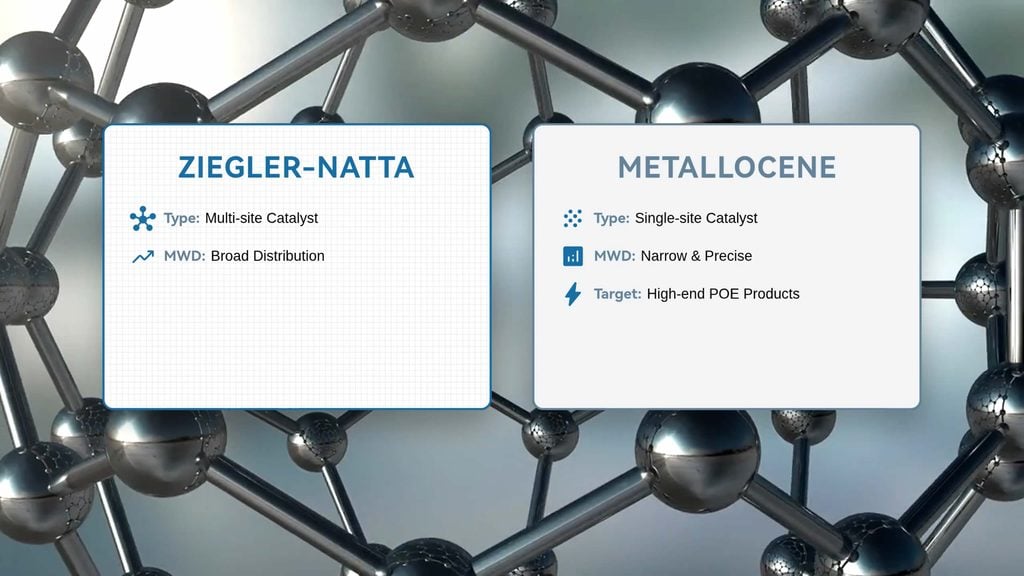
The most critical link in this value chain is the catalyst. Unlike conventional Ziegler-Natta catalysts, which have multiple active sites, metallocene catalysts are single-site catalysts : every active site behaves in essentially the same way, so a polymer’s molecular weight distribution, comonomer incorporation and stereoregularity can all be precisely engineered through molecular design.
This designability translates directly into product performance. In metallocene linear low-density polyethylene (mLLDPE), a narrow molecular weight distribution and uniform comonomer distribution deliver better puncture resistance, heat-seal performance and clarity. Industry reports indicate that film converters using such resins can downgauge film by 15% to 25% while maintaining puncture and seal performance, which directly saves raw material and reduces carbon emissions. In polypropylene, metallocene polypropylene (mPP) is valued for higher clarity and lower volatile and extractable content, and is widely used in nonwovens, film, injection molding and medical products.
How a metallocene catalyst ultimately performs depends on the combined effect of its ligand substituents, its bridging scheme and its central metal (zirconium, hafnium or titanium), which together influence activity, comonomer response, stereoselectivity and polymer molecular weight. These precatalysts also typically require activation by cocatalysts such as methylaluminoxane (MAO) and are often supported on silica or similar carriers to suit industrial polymerization processes. Ligands, precatalysts, activators and supports are therefore one interdependent system : a weakness in any one of them limits the performance of the final polymer.
3. Barriers and Market Structure : The Case of POE
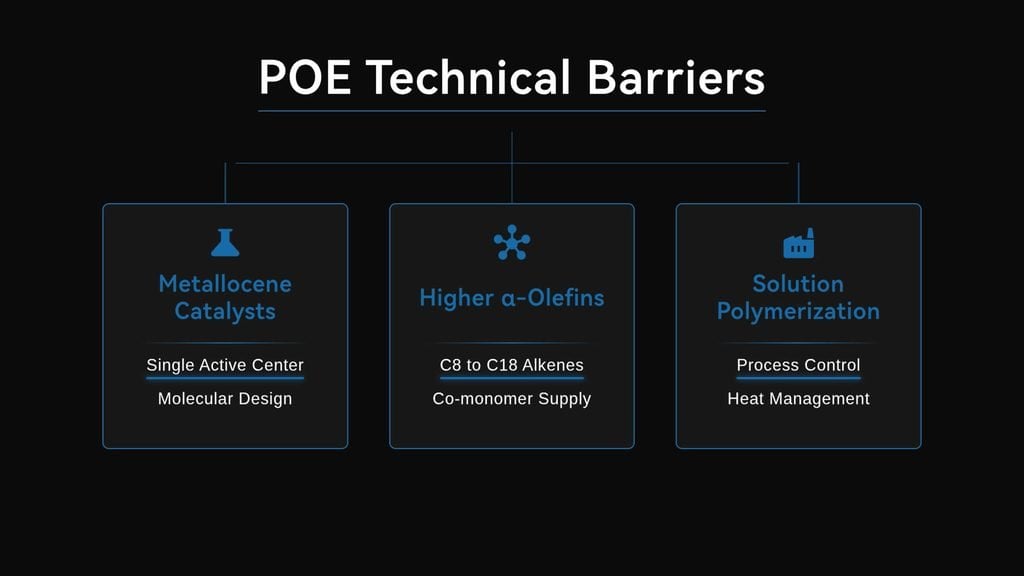
POE (polyolefin elastomer) illustrates this point most clearly. Industry analyses of POE identify three technical barriers : metallocene catalysts, higher α-olefins and solution polymerization. Commercial POE is currently produced mainly with bridged metallocene catalysts and constrained geometry catalysts (CGC), together with cocatalysts such as MAO. Because these barriers are high, global POE supply has long been concentrated among a handful of producers, including Dow, ExxonMobil, Mitsui Chemicals, LG, SK-SABIC and Borealis, with combined capacity of roughly 1.68 million tonnes per year.
Higher α-olefins are equally critical feedstocks. According to Mordor Intelligence, the global α-olefin market is expected to grow from about 7.32 million tonnes in 2026 to about 9.40 million tonnes in 2031, a CAGR of about 5.13%. 1-Hexene is the fastest-growing grade at about 5.88%, mainly because high-end grades such as metallocene LLDPE require high-purity 1-hexene and 1-octene as comonomers. In other words, metallocene catalysts not only determine polymer performance but also pull the entire upstream feedstock chain toward higher purity and higher value.
Whoever masters the synthesis of ligands, main catalysts and activators holds the core of high-end polyolefins.
4. Watson : A Product System Spanning the Catalyst Value Chain
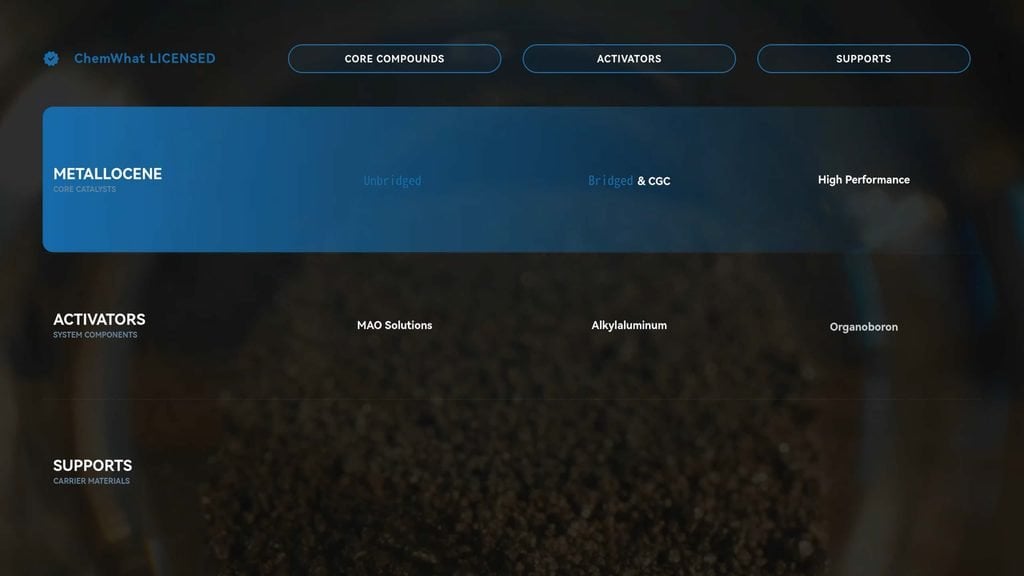
Watson is determined to change this landscape at this critical link. The company is dedicated to metallocene catalyst materials and, operating under a global brand license from ChemWhat, has built a complete product system covering three categories : core metallocene compounds, activators and supports. It has so far developed 14 products.
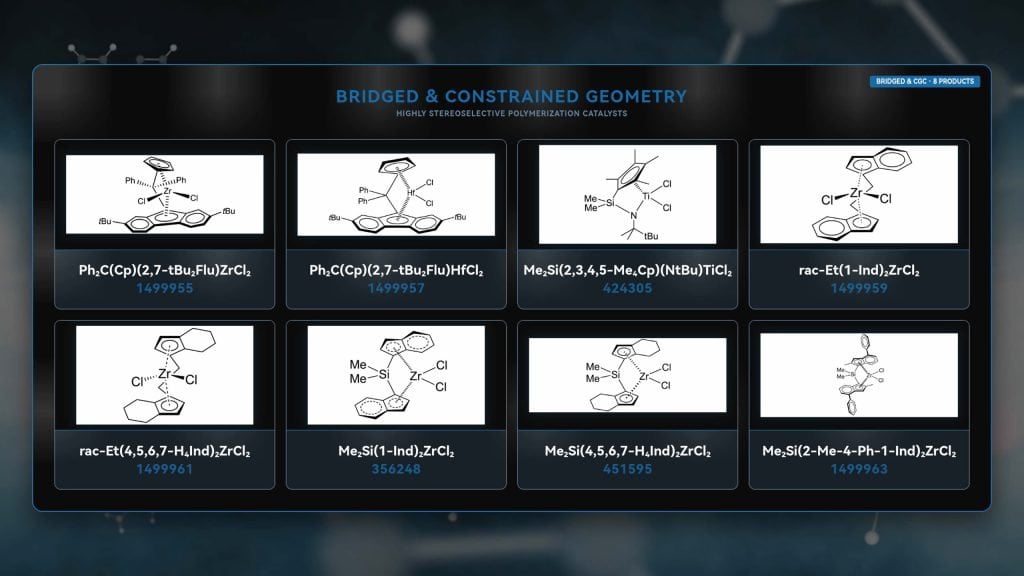
Among the core metallocene compounds, the products fall into two groups, unbridged and bridged (including constrained geometry).
| ChemWhat Code | Product | Structure |
|---|---|---|
| 33714 | Bis(1-n-butylcyclopentadienyl)zirconium dichloride | 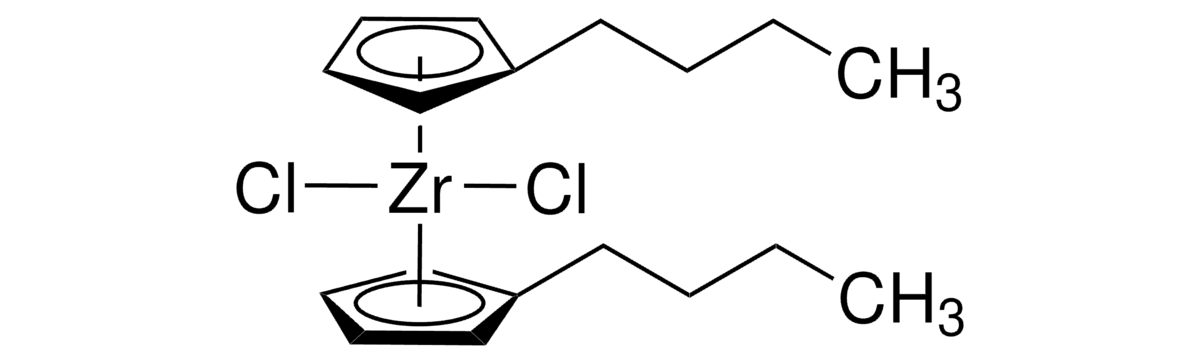 |
| 33690 | Bis(1-n-butyl-3-methylcyclopentadienyl)zirconium dichloride | 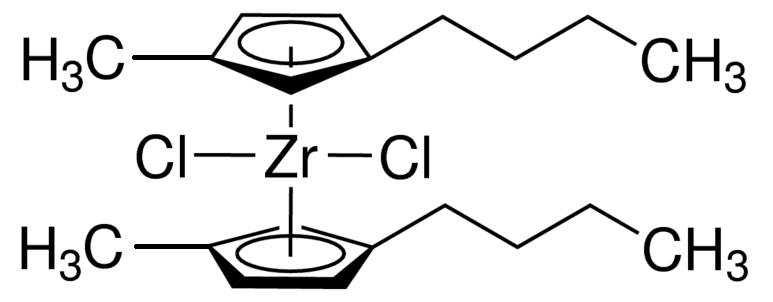 |
| 131434 | Bis(indenyl)zirconium dichloride |  |
| 1499949 | (Indenyl)(1-n-butylcyclopentadienyl)zirconium dichloride | 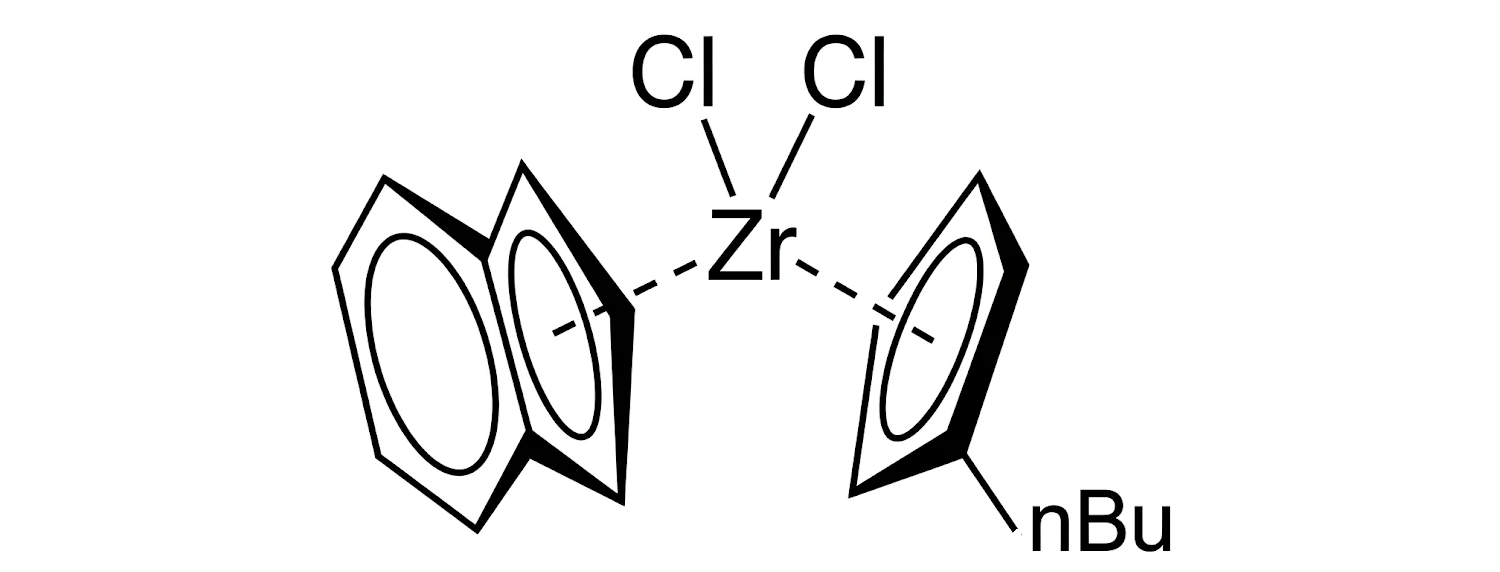 |
| 1499953 | (Indenyl)(1-n-butyl-3-methylcyclopentadienyl)zirconium dichloride | 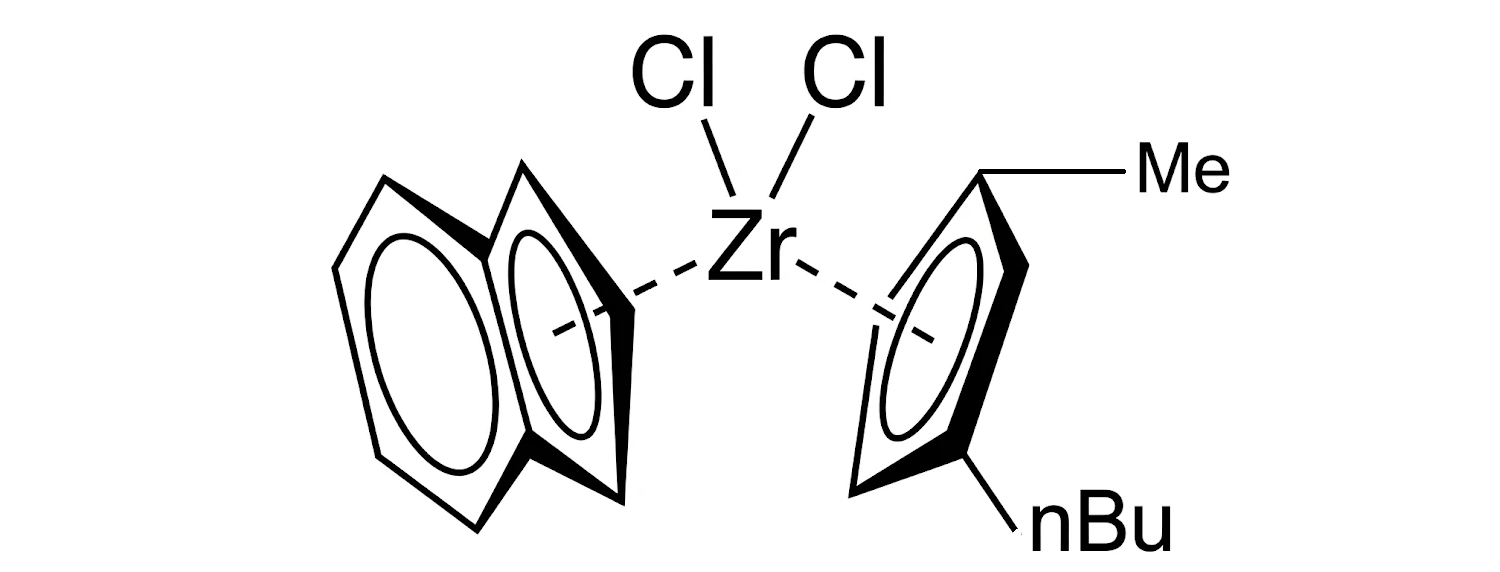 |
| 1499955 | Diphenylmethylene-bridged (cyclopentadienyl)(2,7-di-tert-butylfluorenyl)zirconium dichloride | 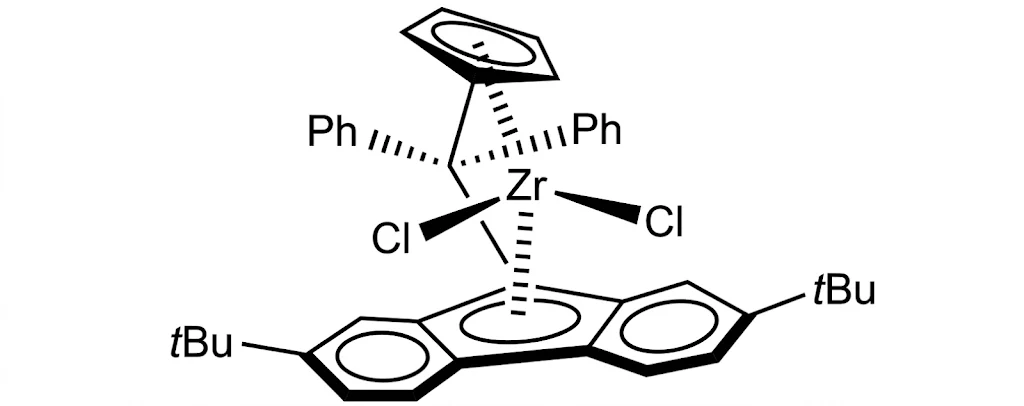 |
| 1499957 | Diphenylmethylene-bridged (cyclopentadienyl)(2,7-di-tert-butylfluorenyl)hafnium dichloride | 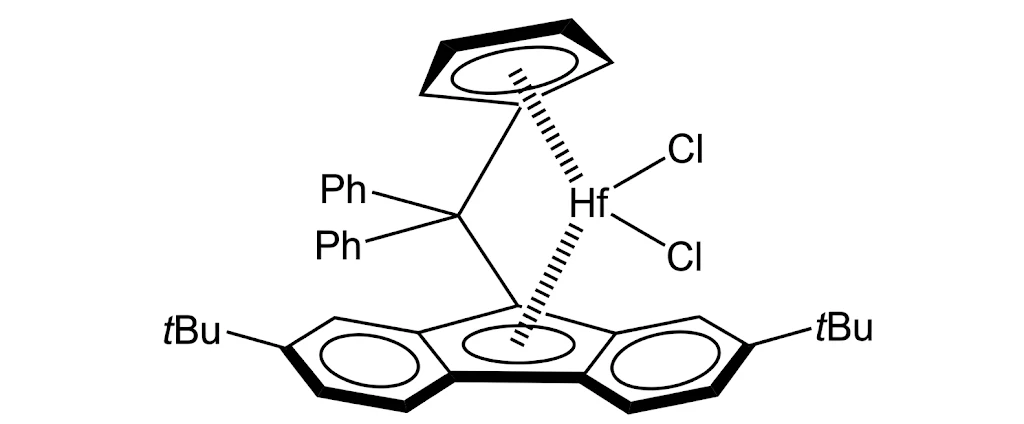 |
| 424305 | Dimethylsilyl(tert-butylamido)(tetramethylcyclopentadienyl)titanium dichloride | 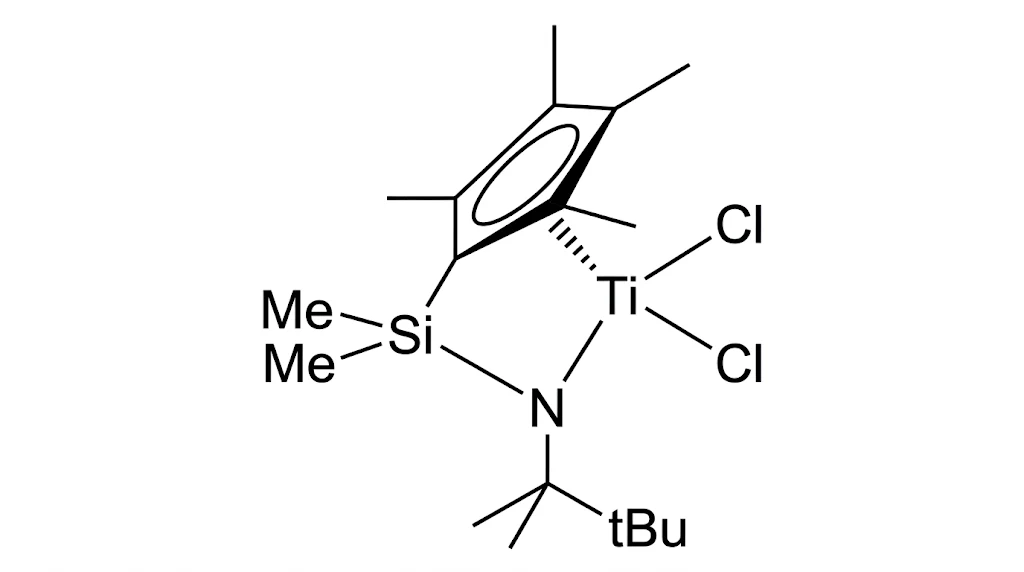 |
| 1499959 | rac-Ethylenebis(1-indenyl)zirconium dichloride | 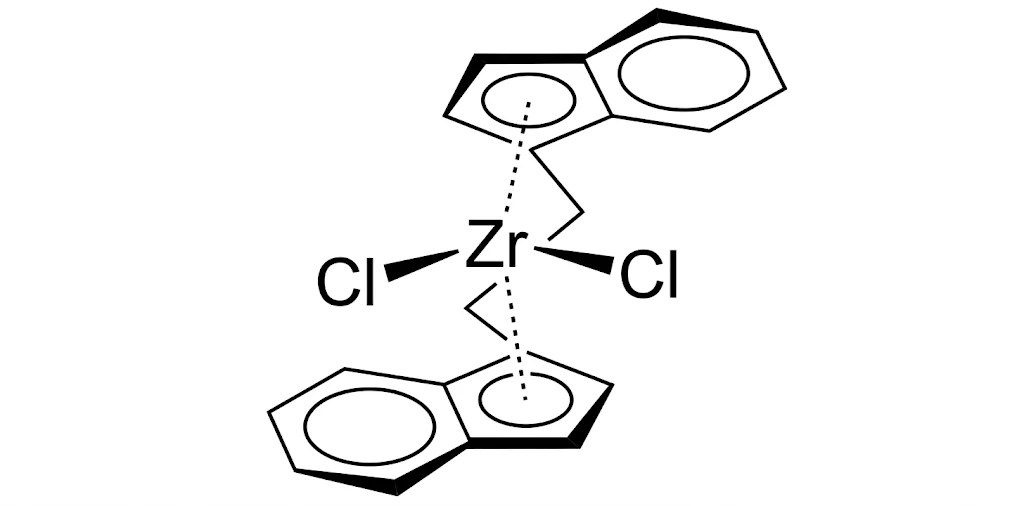 |
| 1499961 | rac-Ethylenebis(4,5,6,7-tetrahydro-1-indenyl)zirconium dichloride | 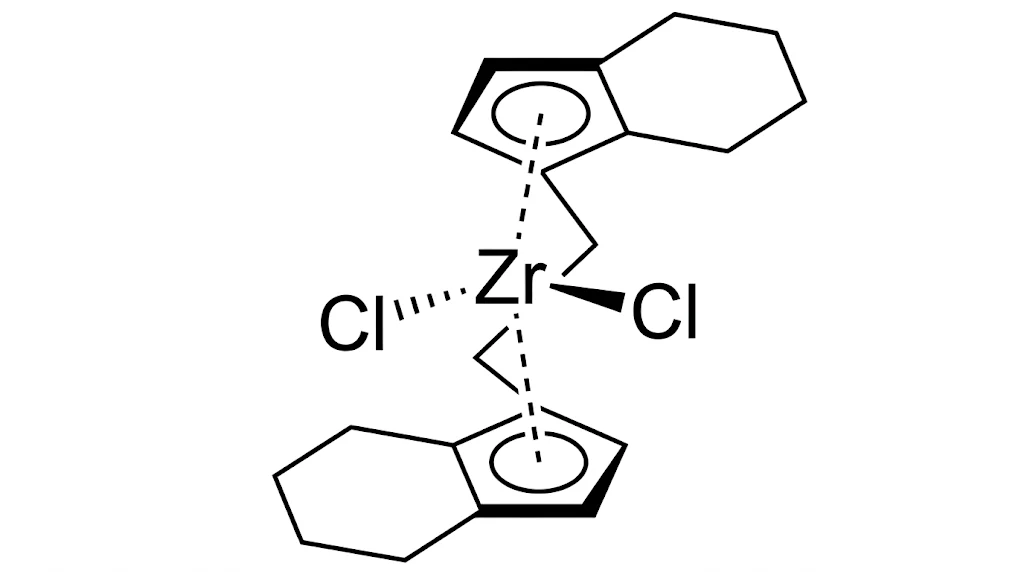 |
| 356248 | rac-Dimethylsilylbis(1-indenyl)zirconium dichloride | 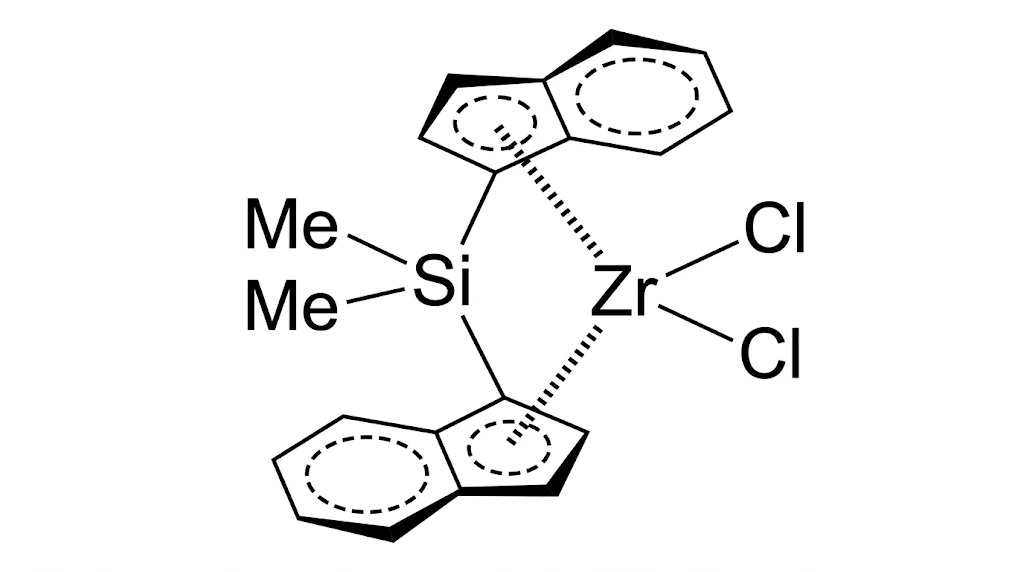 |
| 451595 | rac-Dimethylsilylbis(4,5,6,7-tetrahydro-1-indenyl)zirconium dichloride | 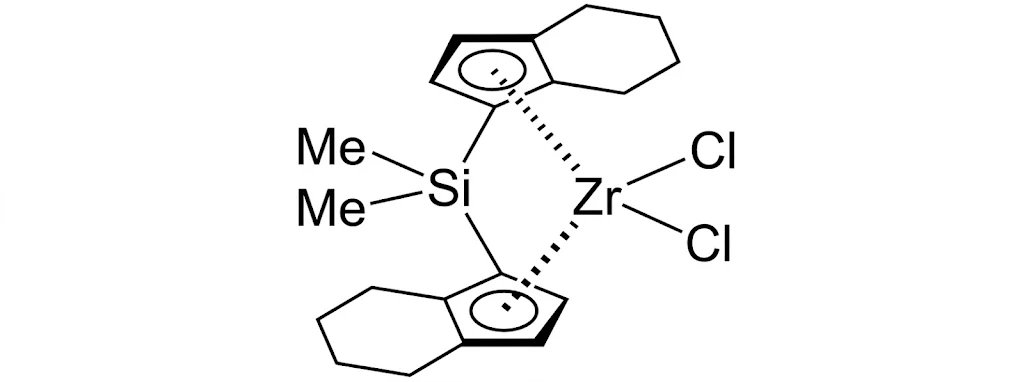 |
| 1499963 | rac-Dimethylsilylbis(2-methyl-4-phenyl-1-indenyl)zirconium dichloride | 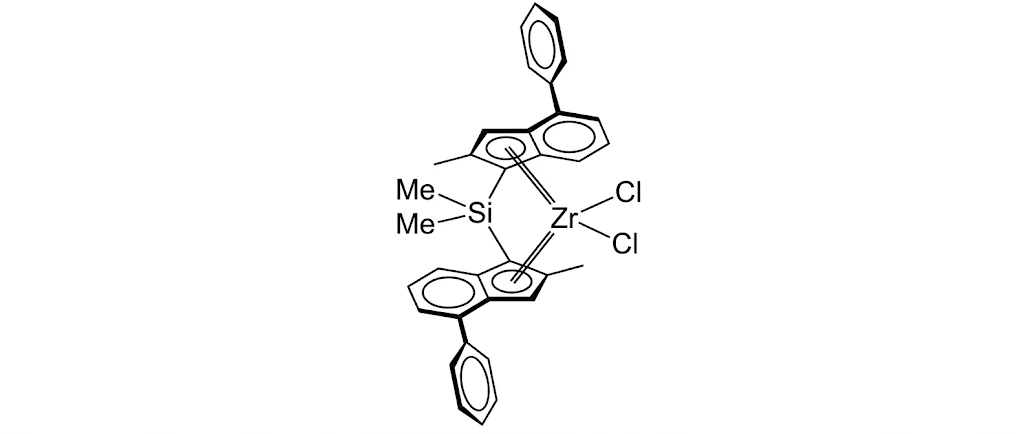 |
Among these, 424305 is a CGC titanium catalyst that can be used for the copolymerization of ethylene with higher α-olefins, and 1499963 is suited to highly stereoselective polymerization. Bridging fixes the spatial arrangement of the ligands, and the racemic (rac-) configuration is a prerequisite for polymers with high stereoregularity, so configurational purity is one of our key quality-control priorities. All of the metallocene compounds above are of greater than 98% purity, providing a stable raw-material foundation for downstream catalyst preparation and polymerization evaluation.
On the activator side, Watson supplies methylaluminoxane (MAO) as a 10% toluene solution and has mastered the synthesis of alkylaluminum and organoboron activators, which can be matched with main catalysts of different structures.
5. From Ligand to Polymerization Evaluation : A Technology Platform Across the Entire Chain
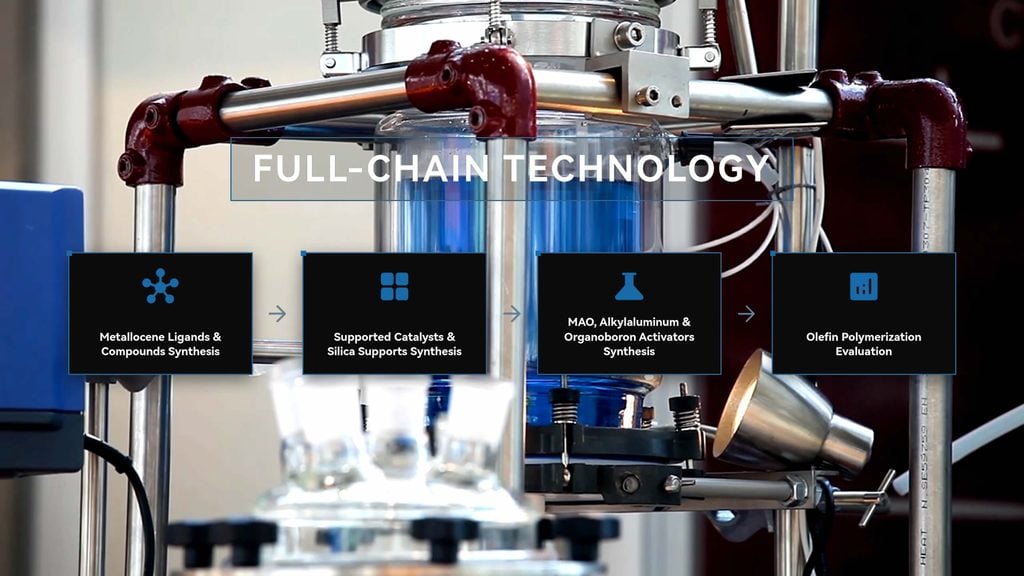
These products are backed by a body of technology that spans the entire chain :
- Metallocene ligand synthesis :ligands are the “skeleton” of a metallocene compound, and their purity and structure determine the quality of everything built on them ;
- Metallocene compound synthesis :covering unbridged, bridged and constrained-geometry structures ;
- Supported metallocene catalyst synthesis :enabling catalysts to meet the needs of industrial polymerization processes ;
- Silica support synthesis :the pore structure and surface properties of the support affect loading efficiency and polymerization behavior ;
- Methylaluminoxane activator synthesis ;
- Alkylaluminum and organoboron synthesis ;
- Olefin polymerization evaluation :systematic assessment of catalyst activity, comonomer response and polymer structure.
This means Watson does not merely supply individual compounds. It can bring ligands, main catalysts, activators, supports and polymerization validation together on one technology platform and combine and tune them around each customer’s target product, which matters greatly in an industry built on molecular design.
6. Downstream Markets Across the Globe
This capability maps onto a series of downstream markets that span the globe.
POE (polyolefin elastomer).Photovoltaic encapsulant film is the fastest-growing application. Some studies estimate that global demand for photovoltaic-grade POE resin will rise from roughly 390,000 – 430,000 tonnes in 2024 to roughly 460,000 – 530,000 tonnes in 2026, while demand for modified plastics driven by automotive lightweighting is another growth driver. With catalysts, higher α-olefins and solution polymerization forming three stacked barriers, supply remains highly concentrated.
mPE (metallocene polyethylene).Its stiffness, clarity, heat-seal strength and environmental stress-crack resistance make it widely used in packaging film, pipe, injection molding and rotational molding, with packaging film its largest application.
mPP (metallocene polypropylene).The clarity, strength and low volatile and extractable content of mPP make it widely used in nonwovens, injection molding and film, and especially popular in medical and hygiene products, cosmetics and food and beverage packaging. In 2020, medical applications briefly became the largest segment of global mPP revenue, at about US$427 million, driven mainly by demand for masks and other protective products. Major international resin producers have also launched metallocene polypropylene grades for spunbond and meltblown nonwovens and medical devices, showing that this direction already has a mature commercial path.
mPEP (metallocene ethylene-propylene rubber).With the precise control of molecular structure that metallocene catalysts offer, ethylene-propylene rubber can achieve a more uniform composition and a narrower molecular weight distribution, making it suitable for automotive, sealing and polymer-modification applications that demand consistent performance.
COC (cyclic olefin copolymer).Global annual demand is about 80,000 to 90,000 tonnes, with capacity long concentrated among a few Japanese producers. Applications range from smartphone and automotive lenses and AR/VR optical components to prefilled syringes, biologics and mRNA vaccine packaging, where cleanliness and stability requirements are exceptionally high.
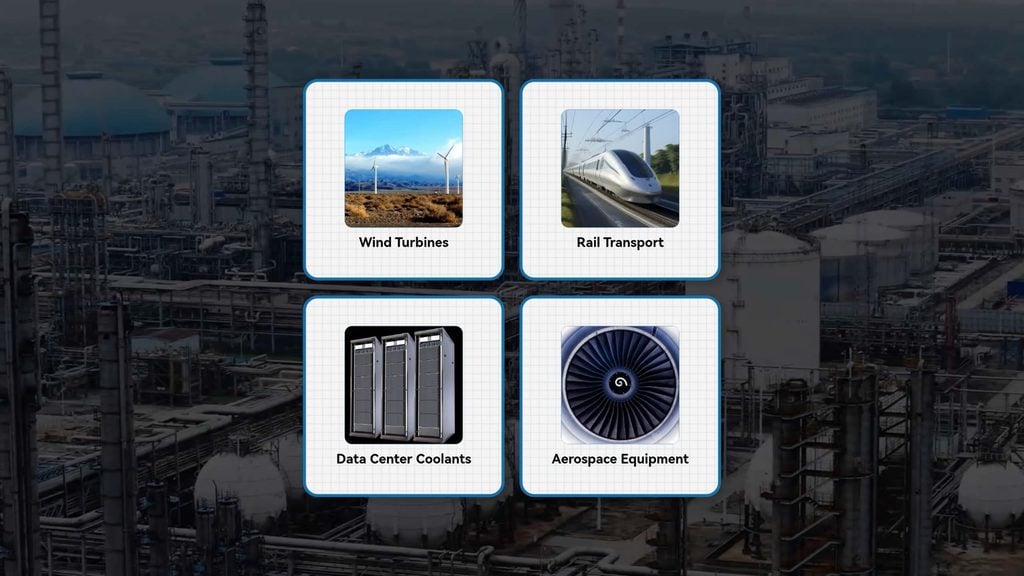
mPAO (metallocene-based polyalphaolefin).It is a core feedstock for premium synthetic lubricants, used in wind turbines, rail transport, data-center coolants and even aerospace equipment. Large-scale global production has long been concentrated in three companies, ExxonMobil, INEOS and Chevron. That high concentration of supply suggests there is still substantial room for catalyst innovation to unlock additional capacity.
Higher α-olefins.As noted above, they are key comonomers for metallocene polyethylene and POE as well as feedstocks for PAO. Market demand is growing steadily, with particularly strong demand for high-purity grades.
7. Conclusion : Built on Molecular Design, Growing with Global Partners
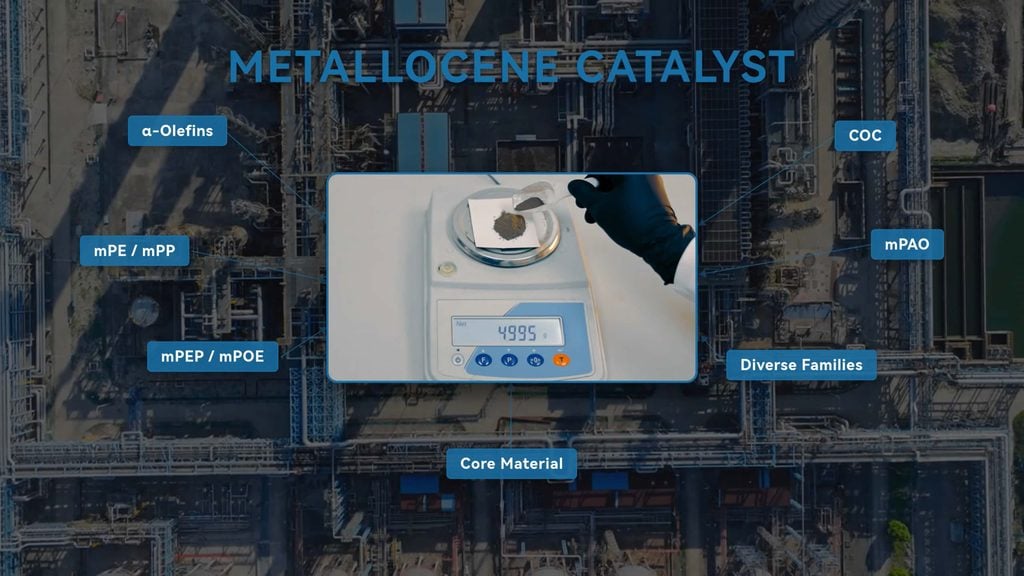
From higher α-olefins, mPE, mPP, mPEP and mPOE to cyclic olefin copolymers and mPAO, these seemingly diverse product families share one core material : the metallocene catalyst. Watson brings products, technology and proprietary patented structures to this link of the chain. That allows it to serve markets that have already reached global scale, such as photovoltaic POE, packaging film and lubricant base oils, and also to supply materials for newer directions such as COC and mPP, where molecular structure must be controlled even more finely.
Backed by a complete technology platform and the ChemWhat global brand license, Watson has both the capability and the confidence to work with partners across the global value chain to take high-end polyolefins into ever broader applications.