In fields such as hydrogels, GelMA, and 3D bioprinting — where materials must cure while simultaneously protecting living cells — choosing a photoinitiator is never a single-criterion decision. It must be efficient, safe, water-soluble, formulation-friendly, and proven at scale, and few molecules satisfy all of these conditions at once. LAP (ChemWhat Code 1208803) is one of the rare answers that genuinely holds up at this intersection. Its value lies not in any single “best-in-class” parameter, but in simultaneously meeting multiple demanding requirements — precisely what sets it apart from TPO, Irgacure 819, Irgacure 2959, Eosin-Y, and other photoinitiators.
A Wavelength Window Defined by Biology, Not Convenience
LAP’s absorption peak sits around 365 nm and extends into the 405 nm visible range, allowing it to be efficiently activated by conventional UV sources while also remaining compatible with the 405 nm LED light engines now common in bioprinting equipment — giving it far greater flexibility than initiators locked to a single wavelength band.
Behind this choice of absorption band lie two decisive scientific thresholds : the aromatic amino acids in proteins absorb maximally around 280 nm, and DNA bases around 260 nm. Below 300 nm, photon energy is high enough to be absorbed directly by these biomolecules, triggering structural photochemical damage — this is precisely why deep-UV initiators such as Irgacure 2959 carry an inherent risk of cell injury. Once the wavelength crosses 400 nm, biomolecules essentially stop absorbing photons directly, and the damage mechanism shifts to dose-dependent, controllable indirect oxidation via free radicals. LAP’s effective response window sits squarely between these two lines.
Penetration Depth : A More Nuanced Story Than “Longer Is Always Better”
Wavelength also governs penetration depth : shorter wavelengths experience stronger scattering and absorption in tissue and gels, limiting depth, while longer wavelengths generally penetrate deeper — an advantage for achieving uniform curing throughout thicker bioprinted structures.
It should be noted, however, that in pure hydrogel systems without hemoglobin, the true limiting factor for depth is usually the initiator’s own absorbance : the more efficiently it absorbs light, the faster the top layer cures, but the more readily it “intercepts” the light and leaves the bottom under-cured. In practice, this still requires balancing initiator concentration against layer thickness — longer wavelength alone does not automatically mean better penetration.
Water Solubility : The Hardest Advantage to Replicate
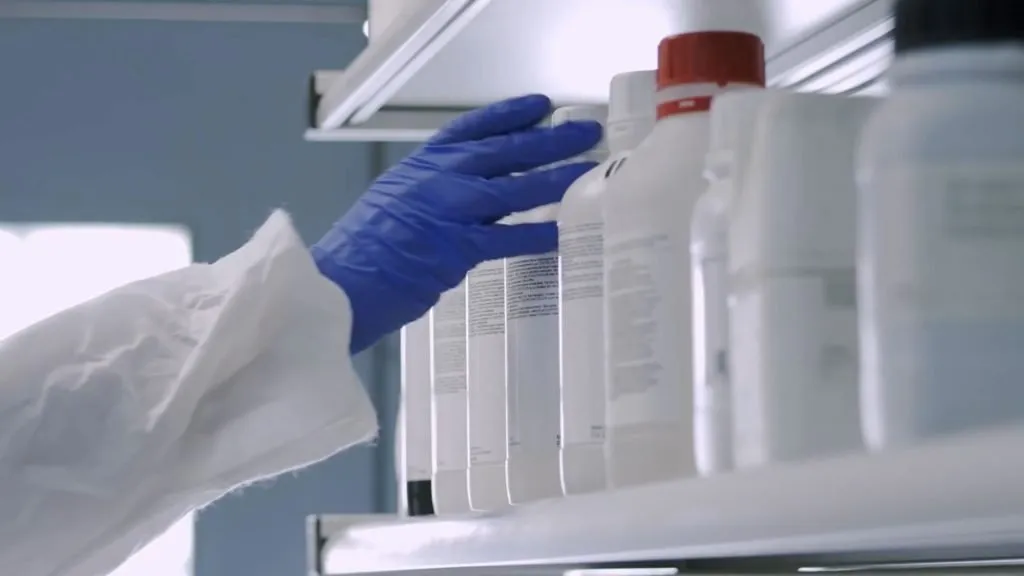
Water solubility addresses the question of “how the initiator is delivered,” and this is LAP’s hardest advantage to replicate. Hydrophobic initiators must first be dissolved in organic solvents such as DMSO or ethanol — but these solvents themselves compromise cell membrane integrity, damage mitochondrial membrane potential, and induce oxidative stress, exposing cells to a double hit of “solvent damage plus radical damage.” More critically, hydrophobic molecules cross cell membranes more readily, allowing the radicals they generate to directly attack mitochondria and nucleic acids, whereas the water-soluble LAP struggles to enter cells, so most of the resulting damage is quenched extracellularly.

Native water solubility also delivers two engineering benefits : uniform molecular-level dispersion (avoiding the uneven crosslinking caused by hydrophobic aggregation), and elimination of the extra development work needed to make a hydrophobic initiator water-compatible — as seen in the microemulsion nanoformulation required for TPO. LAP can simply be prepared as an aqueous solution and sterile-filtered through a 0.2 μm membrane, saving both time and cost.
Where LAP Sits Among the Alternatives
A side-by-side comparison makes the picture clear : TPO and Irgacure 819 are highly efficient but insoluble in water ; Irgacure 2959 is water-soluble but its absorption band falls in the higher-risk deep-UV region ; Eosin Y/Ru-SPS systems are mild but rely on co-initiators such as TEOA, making them multi-component and more complex to formulate.
LAP occupies the scarce intersection of these approaches : native water solubility, a response band that avoids the deep-UV damage zone, a single-component formulation, and a body of literature support built up since 2009. This combination — not superiority on any one metric — is the real reason it is regarded as the “de facto standard”: what it offers is the best overall predictability and process robustness. This is precisely why LAP’s position is so difficult to replace in applications such as cell encapsulation, GelMA-based tissue engineering, DLP/SLA bioprinting, and organ-on-a-chip or microfluidic device fabrication.

From Technical Advantage to Supply-Chain Certainty
Ultimately, a technical advantage only matters if it translates into supply-chain certainty : LAP supplied by ChemWhat maintains a purity consistently above 99.5%, notably higher than the 95% – 98% typical across the industry. Its large-scale production capacity ensures long-term, stable inventory and rapid shipping, while economies of scale help drive down unit cost without compromising purity. For qualifying new and existing customers, ChemWhat also offers free samples, allowing customers to validate batch consistency and real-world curing performance in their own experimental systems before committing to a purchase.
![structure of (2R,4S)-5-([1,1'-biphenyl]-4-yl)-4-((tert-butoxycarbonyl)aMino)-2-Methylpentanoic acid CAS 1012341-50-2](https://www.watson-int.com/wp-content/uploads/2015/07/structure-of-2R4S-5-11-biphenyl-4-yl-4-tert-butoxycarbonylaMino-2-Methylpentanoic-acid-CAS-1012341-50-2.gif "structure of (<span class=\"caps\">2R</span>,<span class=\"caps\">4S</span>)-5-([1,1′-biphenyl]-4-yl)-4-((tert-butoxycarbonyl)aMino)-2-Methylpentanoic acid <span class=\"caps\">CAS</span> 1012341-50-2")